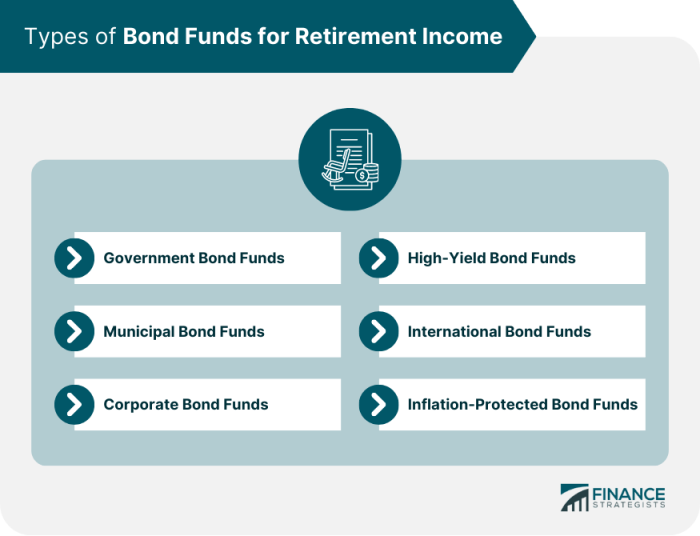
With Bond Income Funds at the forefront, this paragraph opens a window to an amazing start and intrigue, inviting readers to embark on a storytelling casual formal language style filled with unexpected twists and insights.
Bond income funds offer investors a unique opportunity to generate income through bonds while managing associated risks effectively. Let’s delve into how these funds work and why they are a popular choice among investors.
Bond Income Funds
Bond income funds are investment vehicles that primarily invest in a portfolio of bonds issued by governments, municipalities, or corporations. These funds aim to provide investors with regular income payments in the form of interest earned from the bonds held in the portfolio.
Generating Returns
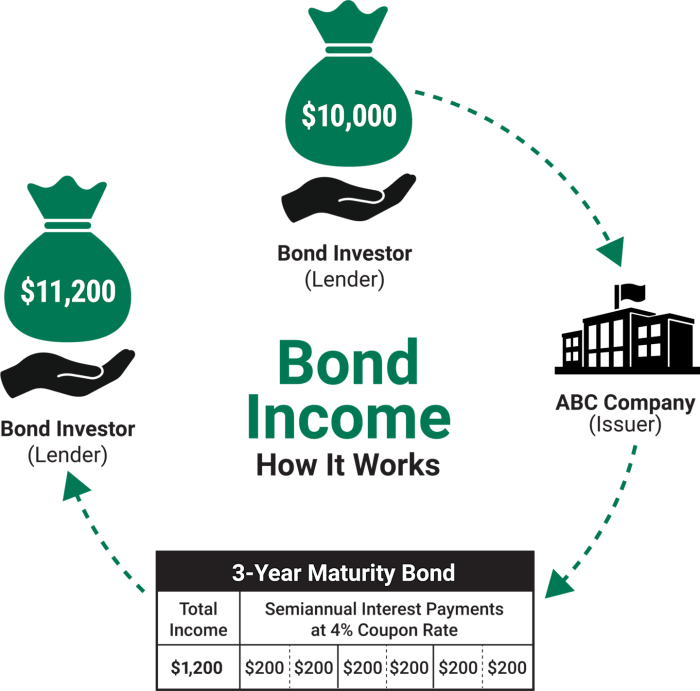
Bond income funds generate returns for investors through the interest payments received from the bonds held in the portfolio. As bond issuers make interest payments, the fund distributes these payments to investors in the form of dividends. Additionally, if the bond prices increase, the fund may realize capital gains when selling bonds at a higher price than the purchase price.
Risks Comparison
When compared to other types of investment funds, bond income funds are generally considered to have lower risk levels. However, they still carry risks such as interest rate risk, credit risk, and inflation risk. Interest rate risk arises from fluctuations in interest rates, which can impact the value of the bond portfolio. Credit risk refers to the risk of bond issuers defaulting on their payments, leading to potential losses for investors.
Inflation risk is the risk that the returns generated by the fund may not keep pace with the rate of inflation, reducing the purchasing power of the investor’s income.
Income Funds
Income funds are a type of mutual fund or exchange-traded fund (ETF) that primarily focuses on generating regular income for investors. These funds typically invest in fixed-income securities such as bonds, treasury bills, or dividend-paying stocks, aiming to provide a steady stream of income while preserving capital.
Types of Income Funds
- Bond Income Funds: These funds primarily invest in a diversified portfolio of bonds issued by governments, municipalities, or corporations.
- Dividend Income Funds: These funds invest in stocks of companies that have a history of paying consistent dividends to shareholders.
- Real Estate Income Funds: These funds focus on investing in real estate properties, such as commercial buildings or residential units, to generate rental income.
Benefits of Investing in Income Funds
- Steady Income: Income funds provide investors with a regular income stream, making them ideal for retirees or those looking for passive income.
- Diversification: By investing in a variety of income-generating assets, income funds help spread risk and reduce the impact of market volatility on returns.
- Professional Management: Income funds are managed by experienced fund managers who make investment decisions on behalf of investors, saving them time and effort.
- Liquidity: Most income funds offer daily liquidity, allowing investors to easily buy or sell shares based on their financial needs.
Index Funds
Index funds are a type of mutual fund that aims to replicate the performance of a specific market index, such as the S&P 500. Unlike actively managed funds, which rely on fund managers to select individual investments, index funds simply hold the same securities as the chosen index. This passive investment approach typically results in lower management fees compared to actively managed funds.
Advantages of Investing in Index Funds
- Low Costs: Index funds generally have lower expense ratios compared to actively managed funds, making them a cost-effective investment option.
- Diversification: By tracking a market index, index funds provide instant diversification across a wide range of securities, reducing individual stock risk.
- Consistent Performance: Over the long term, index funds have historically shown competitive performance compared to actively managed funds, especially after accounting for fees.
Disadvantages of Investing in Index Funds
- No Outperformance: Since index funds aim to match the performance of an index, investors may miss out on the potential for outperformance that active fund managers can provide.
- No Flexibility: Investors in index funds are limited to the securities within the chosen index, which may not always align with their investment objectives or risk tolerance.
- Market Volatility: Index funds are subject to market fluctuations and downturns, as they mirror the performance of the underlying index.
Performance Comparison
Index funds have consistently shown competitive performance compared to actively managed funds over the long term. Studies have indicated that a majority of actively managed funds fail to outperform their respective benchmarks, making index funds an attractive option for investors seeking broad market exposure at a lower cost.
Inflation Hedge
Investors often look for ways to protect their portfolios from the eroding effects of inflation. Bond income funds can serve as a valuable tool in hedging against inflation due to their unique characteristics.
When inflation rises, the purchasing power of money decreases, leading to a decrease in the real return on investments. However, bond income funds can help offset this impact in several ways.
Impact of Inflation on Bond Income Funds and Investor Returns
One of the key impacts of inflation on bond income funds is the potential decline in the value of fixed-income securities. As inflation rises, interest rates also tend to rise, leading to a decrease in the value of existing bonds with lower yields.
- Bond income funds can adjust their holdings to include inflation-protected securities, such as Treasury Inflation-Protected Securities (TIPS), which provide a hedge against inflation by adjusting their principal value with changes in the Consumer Price Index (CPI).
- Investors can also opt for bond income funds with shorter durations, as they are less sensitive to interest rate changes caused by inflation compared to longer-duration bond funds.
- Another strategy is to diversify a portfolio with a mix of bond income funds that include different types of bonds, such as corporate bonds, municipal bonds, and international bonds, to spread out the risk associated with inflation.
Insurance Premiums
Insurance premiums play a crucial role in providing financial protection to individuals and businesses. One common practice among insurance companies is to invest a portion of these premiums in various financial instruments to generate returns and ensure they have sufficient funds to pay out claims when needed.
Role of Bond Income Funds in Insurance Portfolios
Bond income funds are a popular choice for insurance companies when it comes to managing their investment portfolios. These funds primarily invest in a diversified portfolio of bonds, providing a steady stream of income through interest payments. Insurance companies utilize bond income funds to achieve a balance between risk and return, as bonds are generally considered less volatile compared to other investment options.
- Bond income funds offer stability: Insurance companies rely on the stability of bond income funds to ensure a consistent source of income to meet their financial obligations, such as policyholder claims.
- Liquidity management: Bonds held in these funds can be easily liquidated when needed, allowing insurance companies to access funds quickly to cover unexpected expenses or claims.
- Diversification benefits: By investing in a variety of bonds with different maturities and credit ratings, insurance companies can reduce the overall risk in their investment portfolios.
- Income generation: Bond income funds provide a steady income stream through interest payments, which can help insurance companies offset fluctuations in other parts of their investment portfolio.
In conclusion, Bond Income Funds provide a stable source of income while navigating the complexities of the investment landscape. Whether you’re a seasoned investor or just starting out, these funds offer a balanced approach to building wealth and managing risks effectively.
Quick FAQs
What are bond income funds?
Bond income funds are investment funds that primarily invest in bonds to generate income for investors.
How do bond income funds generate returns?
Bond income funds generate returns through interest payments on the bonds they hold in their portfolio.
What risks are associated with bond income funds?
The risks associated with bond income funds include interest rate risk, credit risk, and market risk.
Why are bond income funds considered a hedge against inflation?
Bond income funds can act as a hedge against inflation because bond prices tend to rise when inflation increases.
How do insurance companies utilize bond income funds?
Insurance companies use bond income funds to manage their investment portfolios and ensure stability and liquidity.