Embark on a journey through the world of income funds tailored for retirees, exploring the top choices and strategies to secure your financial future.
Discover how these funds can provide stability and growth in your retirement portfolio, setting you up for a prosperous and worry-free retirement.
Top Income Funds for Retirees
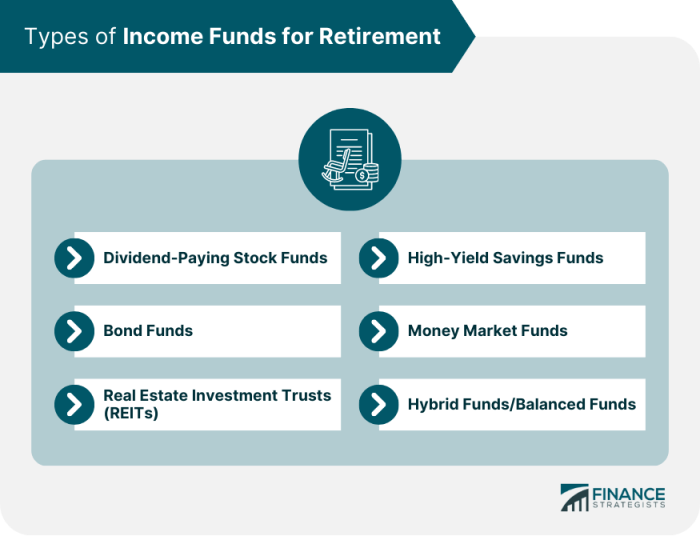
Income funds are investment vehicles that primarily focus on generating regular income for investors rather than capital appreciation. These funds typically invest in fixed-income securities such as bonds, preferred stocks, and dividend-paying equities. Unlike growth-oriented investments, income funds prioritize providing a steady stream of income to investors, making them a popular choice for retirees looking to supplement their retirement income.
Key Features of Income Funds for Retirees
Income funds offer several key features that make them attractive options for retirees. These include:
- Diversification: Income funds typically hold a mix of fixed-income securities, which helps reduce the overall risk in the portfolio.
- Steady Income: Retirees can rely on regular income distributions from these funds, providing a consistent cash flow to cover living expenses.
- Liquidity: Many income funds offer daily liquidity, allowing retirees to access their money when needed.
- Professional Management: Income funds are managed by experienced fund managers who make investment decisions on behalf of investors.
Criteria for Selecting Top Income Funds for Retirees
When choosing income funds for retirees, it’s essential to consider the following criteria:
- Expense Ratio: Look for funds with low expense ratios to maximize returns.
- Yield: Consider the fund’s historical yield to assess its income-generating potential.
- Risk Profile: Evaluate the fund’s risk level and ensure it aligns with your risk tolerance.
- Performance Track Record: Review the fund’s past performance to gauge its ability to deliver consistent returns.
Popular Income Funds Among Retirees
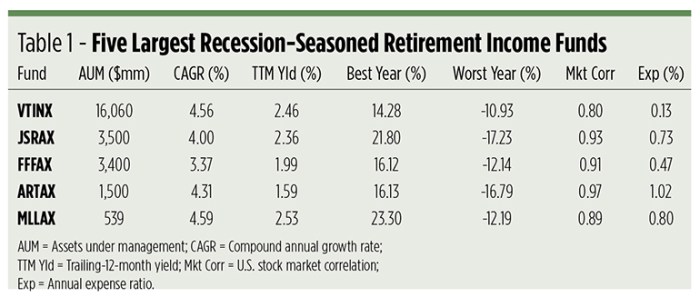
There are several income funds that are popular among retirees due to their strong performance and income-generating capabilities. Some of the top income funds for retirees include:
- Vanguard High Dividend Yield Index Fund
- PIMCO Income Fund
- Fidelity Strategic Income Fund
- T. Rowe Price Dividend Growth Fund
Index Funds as a Retirement Strategy
Index funds are a type of mutual fund or exchange-traded fund (ETF) that tracks a specific market index, such as the S&P 500. They are passively managed, meaning they aim to replicate the performance of the index they are tracking rather than trying to outperform it.
Benefits of Index Funds for Retirees
Index funds offer several advantages for retirees compared to actively managed funds. One key benefit is their lower fees, as they require less active management which results in lower expenses. This can significantly impact retirees’ long-term returns, especially in a retirement portfolio where every dollar counts. Additionally, index funds provide broad diversification as they hold a wide range of securities within a particular index, reducing individual stock risk.
Top Index Funds for Retirees
Vanguard Total Stock Market Index Fund (VTSAX)
This fund provides exposure to the entire U.S. stock market, offering retirees diversification across various sectors and industries.
iShares Core S&P 500 ETF (IVV)
Tracking the S&P 500 index, this fund gives retirees access to the largest publicly traded companies in the U.S., providing stability and growth potential.
Schwab U.S. Dividend Equity ETF (SCHD)
Focusing on dividend-paying stocks, this fund can be a valuable addition to a retiree’s portfolio, offering income and potential for capital appreciation.
Role of Index Funds in Retirement Portfolios
Index funds play a crucial role in retirement portfolios by providing retirees with a cost-effective way to achieve diversification and minimize risk. By investing in a broad market index, retirees can spread their investment across numerous companies, industries, and regions, reducing the impact of any single stock or sector downturn. This can help retirees preserve their wealth and generate consistent returns over the long term.
Income Funds as an Inflation Hedge
Income funds can serve as a valuable hedge against inflation for retirees, as they typically provide a steady stream of income that can adjust with inflationary pressures. This can help retirees maintain their purchasing power and financial stability during periods of rising prices.
Strategies within Income Funds
- Investing in dividend-paying stocks: Companies that have a history of paying dividends tend to increase their dividend payouts over time, which can help offset the effects of inflation.
- Choosing funds with inflation-protected securities: Some income funds include assets like Treasury Inflation-Protected Securities (TIPS) or inflation-linked bonds, which are designed to keep pace with inflation.
- Regularly reviewing and adjusting the portfolio: Retirees should monitor their income funds and make changes as needed to ensure they are well-positioned to combat inflation.
Examples of Income Funds
- Vanguard Inflation-Protected Securities Fund: This fund invests in TIPS and has historically performed well during inflationary periods, providing a reliable income stream for retirees.
- Fidelity Dividend Growth Fund: With a focus on companies with a track record of increasing dividends, this fund can be a good option for retirees seeking inflation protection.
Importance of Considering Inflation
Income funds play a crucial role in retirement planning, and considering inflation is essential when selecting these funds. By choosing income funds that can adapt to inflationary pressures, retirees can ensure their financial security and maintain their standard of living over the long term.
Income Funds and Insurance Premiums
Income funds can play a crucial role in helping retirees cover their insurance premiums during retirement. By strategically allocating funds towards insurance policies, retirees can ensure financial security and peace of mind in their later years.
Advantages of Using Income Funds for Insurance
- Stable Income Source: Income funds provide a reliable stream of income that can be used to fund insurance premiums without disrupting the overall financial plan.
- Diversification: By investing in a variety of income-generating assets, retirees can mitigate risks and ensure a consistent flow of funds for insurance payments.
- Tax Efficiency: Certain income funds may offer tax advantages, allowing retirees to maximize their funds for insurance coverage.
Tips for Structuring Income Funds for Insurance Costs
- Assess Insurance Needs: Determine the type and amount of insurance coverage required and allocate funds accordingly to meet these needs.
- Regular Review: Periodically review the performance of income funds to ensure they are generating sufficient returns to cover insurance premiums effectively.
- Emergency Fund: Maintain a separate emergency fund to cover unexpected insurance costs or fluctuations in income from the funds.
Risks and Drawbacks of Using Income Funds for Insurance Premiums
- Market Volatility: Fluctuations in the market can impact the performance of income funds, potentially affecting the ability to cover insurance premiums consistently.
- Interest Rate Risks: Changes in interest rates can influence the returns generated by income funds, posing a risk to the stability of funds allocated for insurance payments.
- Dependency on Returns: Relying solely on income funds to fund insurance premiums may lead to a shortfall in funds if returns are lower than expected.
In conclusion, selecting the right income funds for your retirement is crucial for long-term financial success. By understanding the key features and benefits, you can make informed decisions to build a secure financial foundation for your golden years.
Detailed FAQs
How do income funds differ from other types of investments?
Income funds primarily focus on generating regular income through dividends, interest payments, or other sources, making them ideal for retirees seeking steady cash flow.
What criteria should I consider when selecting income funds for retirement?
When choosing income funds for retirement, factors such as yield, risk level, expense ratios, and fund performance should be carefully evaluated to align with your financial goals.
Can income funds help protect against inflation?
Income funds can act as a hedge against inflation by providing a consistent income stream that may keep pace with rising prices, safeguarding retirees’ purchasing power.
Are there any risks associated with using income funds to cover insurance premiums?
While income funds can be used to fund insurance policies, retirees should be aware of potential drawbacks such as market fluctuations affecting fund performance and liquidity challenges.