As Best Car Insurance Premium Rates takes center stage, this opening passage beckons readers into a world crafted with good knowledge, ensuring a reading experience that is both absorbing and distinctly original. Let’s delve into the realm of car insurance premiums and discover the secrets to securing the best rates for your vehicle.
Exploring the factors influencing premium rates and the strategies to uncover the most cost-effective options will empower you to make informed decisions when it comes to protecting your car.
Introduction to Car Insurance Premium Rates
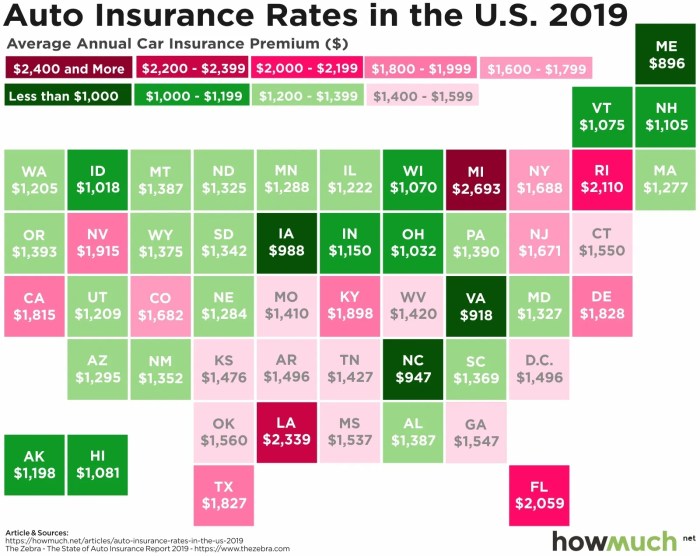
Car insurance premium rates refer to the amount of money a policyholder pays to an insurance company for coverage. These rates are determined based on various factors and can vary between insurance providers.
Factors Affecting Car Insurance Premium Rates
- Driving record: A clean driving record with no accidents or traffic violations typically results in lower premium rates.
- Age and gender: Younger drivers and males tend to pay higher premiums due to a higher risk of accidents.
- Type of car: The make and model of the car, as well as its age and safety features, can impact premium rates.
- Location: The area where the car is primarily driven can affect rates, with urban areas often having higher rates due to increased risk of theft or accidents.
- Coverage options: The type and amount of coverage selected by the policyholder can also influence premium rates.
Importance of Comparing Different Rates
It is essential to compare car insurance premium rates from various providers to ensure you are getting the best deal possible. By exploring different options, you can find a policy that offers adequate coverage at a competitive price. Additionally, comparing rates allows you to identify any potential discounts or special offers that may help lower your premium costs.
Finding the Best Car Insurance Premium Rates
Finding the best car insurance premium rates can be a daunting task, but with the right approach, you can save money while ensuring you have adequate coverage for your vehicle. Here are some tips on how to find the best car insurance premium rates:
Comparing Coverage Options
When looking for the best car insurance premium rates, it’s essential to compare different coverage options available. Some policies may offer more comprehensive coverage, while others may be more basic. Consider your needs and budget when selecting the right coverage for your vehicle.
- Liability Coverage: This is the most basic type of car insurance and covers damages to another person’s property or medical expenses if you’re at fault in an accident.
- Collision Coverage: This type of coverage helps pay for repairs to your own vehicle after an accident.
- Comprehensive Coverage: This coverage protects your vehicle from non-collision incidents like theft, vandalism, or natural disasters.
Role of Deductibles
Deductibles play a significant role in determining premium rates for car insurance. A deductible is the amount you pay out of pocket before your insurance coverage kicks in. Generally, higher deductibles result in lower premium rates, while lower deductibles lead to higher premiums. Consider your financial situation and risk tolerance when choosing a deductible amount that works best for you.
Keep in mind that while opting for a higher deductible can lower your premium rates, it also means you’ll have to pay more out of pocket in the event of a claim.
Income Funds
Income funds are a type of investment fund that primarily focuses on generating regular income for investors. These funds typically invest in fixed-income securities such as bonds, treasury bills, and other debt instruments that pay interest or dividends. The main objective of income funds is to provide a steady stream of income while preserving the capital invested.
Comparing Income Funds to Other Investment Funds
Income funds differ from growth funds, which aim to increase the value of the capital invested over the long term. While growth funds prioritize capital appreciation, income funds prioritize generating income through interest or dividend payments. Additionally, income funds are generally considered lower risk compared to equity funds, as they invest in more stable fixed-income securities.
Benefits of Investing in Income Funds
- Steady Income Stream: Income funds provide a consistent source of passive income through regular interest or dividend payments.
- Capital Preservation: These funds focus on preserving the capital invested while generating income, making them a suitable option for investors seeking stability.
- Diversification: Income funds typically invest in a variety of fixed-income securities, helping to spread risk across different assets.
- Low Volatility: Due to their focus on fixed-income securities, income funds tend to have lower volatility compared to equity funds, making them a more conservative investment option.
Index Funds
Index funds are a type of mutual fund or exchange-traded fund (ETF) that aims to replicate the performance of a specific market index, such as the S&P 500. These funds are passively managed, meaning they do not involve active decision-making by fund managers to buy or sell securities. Instead, they aim to mirror the performance of the index they track.
Comparison with Actively Managed Funds
Actively managed funds, on the other hand, involve fund managers making decisions to buy and sell securities with the goal of outperforming the market. This active management typically results in higher fees for investors compared to index funds. Research has shown that actively managed funds often fail to beat their benchmark indexes over the long term, making index funds an attractive option for many investors.
- Index funds have lower management fees compared to actively managed funds, leading to higher returns for investors over time.
- Actively managed funds often struggle to consistently beat their benchmark indexes, while index funds aim to match the performance of the market.
- Index funds provide diversification across a wide range of securities within the index, reducing individual security risk for investors.
Advantages of Investing in Index Funds
Index funds offer several advantages for investors looking for long-term growth opportunities. These include:
- Low Costs: Index funds typically have lower expense ratios compared to actively managed funds, allowing investors to keep more of their investment returns.
- Consistent Performance: By tracking a specific market index, index funds aim to provide consistent returns over time, avoiding the volatility associated with actively managed funds.
- Diversification: Investing in an index fund provides instant diversification across a broad range of securities, reducing the risk of individual stock selection.
- Passive Management: Index funds require minimal day-to-day management, resulting in lower turnover and tax efficiency for investors.
Inflation Hedge
An inflation hedge is an investment that provides protection against the erosion of purchasing power caused by inflation. It is important to consider inflation when making investment decisions to ensure that the value of your assets keeps pace with the rising cost of goods and services.
Different Investment Options as Inflation Hedges
- Real Estate: Investing in real estate can serve as an inflation hedge as property values tend to increase over time, keeping pace with inflation.
- Commodities: Investing in commodities like gold, silver, and oil can provide a hedge against inflation as their prices tend to rise when inflation is high.
- TIPS (Treasury Inflation-Protected Securities): TIPS are government bonds that adjust their principal value with inflation, providing a guaranteed return above the rate of inflation.
- Stocks: Stocks of companies with pricing power and strong fundamentals can also act as an inflation hedge by increasing in value over time.
Impact of Inflation on Insurance Premiums
Insurance premiums can be affected by inflation as the cost of claims and operating expenses for insurance companies increase with rising prices. To protect against inflation’s impact on insurance premiums, policyholders can consider purchasing policies with inflation protection riders or opting for policies with fixed premiums over a longer term.
Insurance Premiums
Insurance premiums are the amount of money an individual or business pays to an insurance company in exchange for insurance coverage. These premiums are typically paid on a regular basis, whether monthly, quarterly, or annually, and are calculated based on various factors that assess the level of risk associated with insuring the policyholder.
Calculation of Insurance Premiums
Insurance premiums are calculated based on a variety of factors, including the type of insurance coverage, the amount of coverage needed, the policyholder’s age, gender, location, driving record (for auto insurance), health status (for health insurance), and other risk factors. Insurance companies also consider external factors such as inflation rates, interest rates, and overall economic conditions when determining premium rates.
- Factors influencing insurance premiums across different types of insurance include:
- The level of coverage required
- The perceived risk associated with the policyholder
- The insurance company’s claims history and financial stability
- The policyholder’s credit score and payment history
Strategies for Lowering Insurance Premiums
There are several strategies that individuals and businesses can implement to lower their insurance premiums without compromising coverage. Some of these strategies include:
- Increasing deductibles: By opting for a higher deductible, policyholders can lower their premiums as they are taking on more of the financial risk in the event of a claim.
- Bundling insurance policies: Insuring multiple assets or properties with the same insurance company can often lead to discounts on premiums.
- Improving risk factors: Taking steps to improve health, safety, or security measures can demonstrate to insurance companies that the policyholder is a lower risk, potentially leading to lower premiums.
- Shopping around: Comparing quotes from different insurance companies can help policyholders find the best rates for the coverage they need.
In conclusion, navigating the realm of car insurance premium rates can seem daunting, but armed with the right knowledge and tools, you can confidently choose the best coverage at the most competitive prices. By comparing rates, understanding deductibles, and exploring different coverage options, you can ensure your vehicle is safeguarded without breaking the bank.
Commonly Asked Questions
What factors can affect car insurance premium rates?
Factors such as age, driving record, type of vehicle, and location can all impact car insurance premium rates.
How can I find the best car insurance premium rates?
Compare quotes from different providers, consider different coverage options, and explore discounts to find the most affordable premium rates.
What role do deductibles play in determining premium rates?
Deductibles affect how much you pay out of pocket before your insurance coverage kicks in, impacting your premium rates.