Delving into the world of Index Funds for Small Investors, this introduction aims to provide a compelling glimpse into the benefits and strategies surrounding this investment option.
Exploring the dynamics between income funds and index funds, their role in hedging against inflation, and even their impact on insurance premiums, this discussion sheds light on key aspects that can empower small investors in making informed decisions.
Introduction to Index Funds for Small Investors
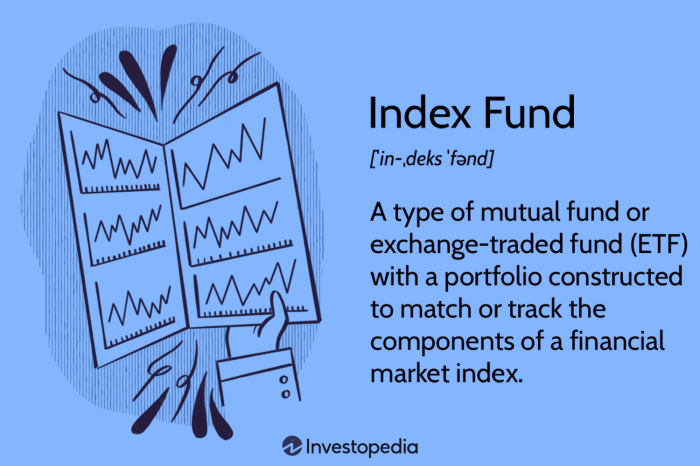
Index funds are a type of mutual fund or exchange-traded fund (ETF) that aims to track the performance of a specific market index, such as the S&P 500 or the Dow Jones Industrial Average. These funds consist of a diversified portfolio of stocks or bonds that mimic the holdings of the index they are tracking.
Benefits of Index Funds for Small Investors
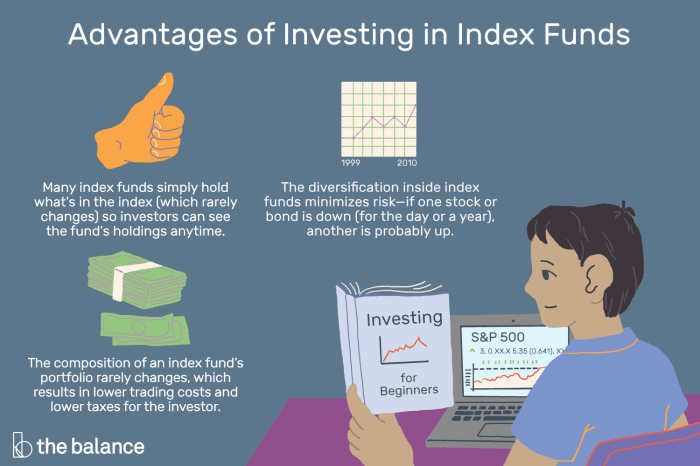
- Low Costs: Index funds typically have lower expense ratios compared to actively managed funds, making them a cost-effective investment option for small investors.
- Diversification: By investing in an index fund, small investors gain exposure to a wide range of securities, reducing the risk of individual stock or bond underperformance impacting their portfolio significantly.
- Passive Management: Index funds are passively managed, meaning they do not require active trading or frequent adjustments by fund managers, resulting in lower management fees.
Examples of Popular Index Funds for Small Investors
Some popular index funds available to small investors include:
Vanguard Total Stock Market Index Fund (VTSAX): This fund tracks the performance of the CRSP US Total Market Index, providing exposure to the entire U.S. stock market.
Schwab U.S. Broad Market ETF (SCHB): An ETF that follows the Dow Jones U.S. Broad Stock Market Index, offering a broad representation of the U.S. equity market.
iShares Core S&P 500 ETF (IVV): This ETF mirrors the performance of the S&P 500 index, which includes 500 of the largest U.S. companies.
Income Funds vs. Index Funds
Income funds and index funds are two popular investment options for small investors, each with its own unique characteristics and strategies for generating returns.
Income Funds
Income funds are investment funds that focus on generating regular income for investors through dividends, interest payments, and other sources of income. These funds typically invest in fixed-income securities such as bonds, treasury bills, and other debt instruments. The primary goal of income funds is to provide a steady stream of income to investors, making them a popular choice for those seeking regular payouts.
- Income funds are actively managed, with fund managers making investment decisions to maximize income generation.
- These funds may be more suitable for conservative investors looking for stable returns and income.
- Risk factors associated with income funds include interest rate risk, credit risk, and reinvestment risk.
Index Funds
Index funds, on the other hand, are passively managed funds that aim to replicate the performance of a specific market index, such as the S&P 500. These funds invest in a diversified portfolio of securities that mirror the composition of the chosen index. The primary goal of index funds is to match the returns of the benchmark index rather than outperforming it.
- Index funds have lower management fees compared to actively managed income funds, making them a cost-effective investment option.
- These funds are ideal for investors seeking broad market exposure and long-term growth potential.
- Risk factors associated with index funds include market risk, tracking error risk, and volatility.
Inflation Hedge with Index Funds
Index funds can serve as a valuable tool for investors looking to hedge against inflation. As inflation erodes the purchasing power of money over time, it is essential to consider investments that can provide returns that outpace inflation rates.
When it comes to index funds, they offer diversification across a broad range of assets, which can help mitigate the impact of inflation on a portfolio. By investing in a variety of companies or assets represented in the index, investors can benefit from the overall growth of the economy, which tends to outpace inflation in the long run.
Examples of Index Funds for Inflation Hedge
- Vanguard Inflation-Protected Securities Fund (VIPSX): This fund invests in Treasury Inflation-Protected Securities (TIPS), which are specifically designed to offer protection against inflation.
- iShares U.S. Real Estate ETF (IYR): Real estate has historically been considered a good hedge against inflation, and this ETF provides exposure to the U.S. real estate market.
- Schwab U.S. TIPS ETF (SCHP): Another option for investors looking to hedge against inflation with TIPS, providing a diversified exposure to Treasury inflation-protected securities.
Strategies for Small Investors
Small investors can leverage index funds as an inflation hedge by regularly contributing to their investments to benefit from dollar-cost averaging. This strategy involves investing a fixed amount of money at regular intervals, allowing investors to buy more shares when prices are low and fewer shares when prices are high.
Additionally, small investors can consider allocating a portion of their portfolio to inflation-protected securities or sectors that tend to perform well during inflationary periods, such as real estate or commodities. By diversifying their investments across different asset classes, small investors can better position themselves to weather the impact of inflation on their portfolios.
Insurance Premiums and Index Funds
When it comes to managing your finances, investing in index funds can have a significant impact on various aspects of your financial well-being. One area where index funds can play a role is in reducing insurance premiums. Let’s explore the relationship between insurance premiums and investing in index funds.
Lowering Insurance Premiums with Index Funds
Investing in index funds can potentially lower insurance premiums due to the overall financial stability and growth potential that these funds offer. Insurance companies often take into account a person’s financial health and stability when determining premiums. By investing in index funds, you are demonstrating a commitment to long-term financial growth, which can be viewed positively by insurance providers.
- Index funds provide a diversified investment portfolio, reducing the risk of financial instability that insurance companies may consider.
- Stable investment returns from index funds can increase your overall financial health, leading to lower insurance premiums.
- Insurance providers may offer discounts or incentives to individuals with a strong investment portfolio, which can be achieved through index funds.
Risks and Considerations
While investing in index funds can have a positive impact on insurance premiums, there are risks and considerations to keep in mind when using this strategy.
- Market volatility can affect the value of index funds, potentially impacting the perceived financial stability by insurance companies.
- Not all insurance providers may consider index fund investments when determining premiums, so the impact may vary depending on the provider.
- It’s important to carefully assess your risk tolerance and investment goals before using index funds solely to lower insurance costs.
In conclusion, Index Funds for Small Investors offer a diversified and cost-effective way to enter the investment market, providing a solid foundation for long-term financial growth. By understanding the nuances between different fund types and leveraging index funds effectively, small investors can navigate the complexities of the financial landscape with confidence.
Top FAQs
How do index funds work?
Index funds track a specific market index, such as the S&P 500, by holding the same stocks in the same proportions as the index.
What are the benefits of index funds for small investors?
Index funds offer diversification, low costs, and typically outperform actively managed funds over the long term.
Can index funds act as a hedge against inflation?
Yes, index funds can help protect investors’ purchasing power during inflationary periods by providing exposure to a broad range of assets.
How can investing in index funds potentially lower insurance premiums?
By building a diversified portfolio with index funds, investors can demonstrate financial stability to insurers, potentially leading to lower premiums.